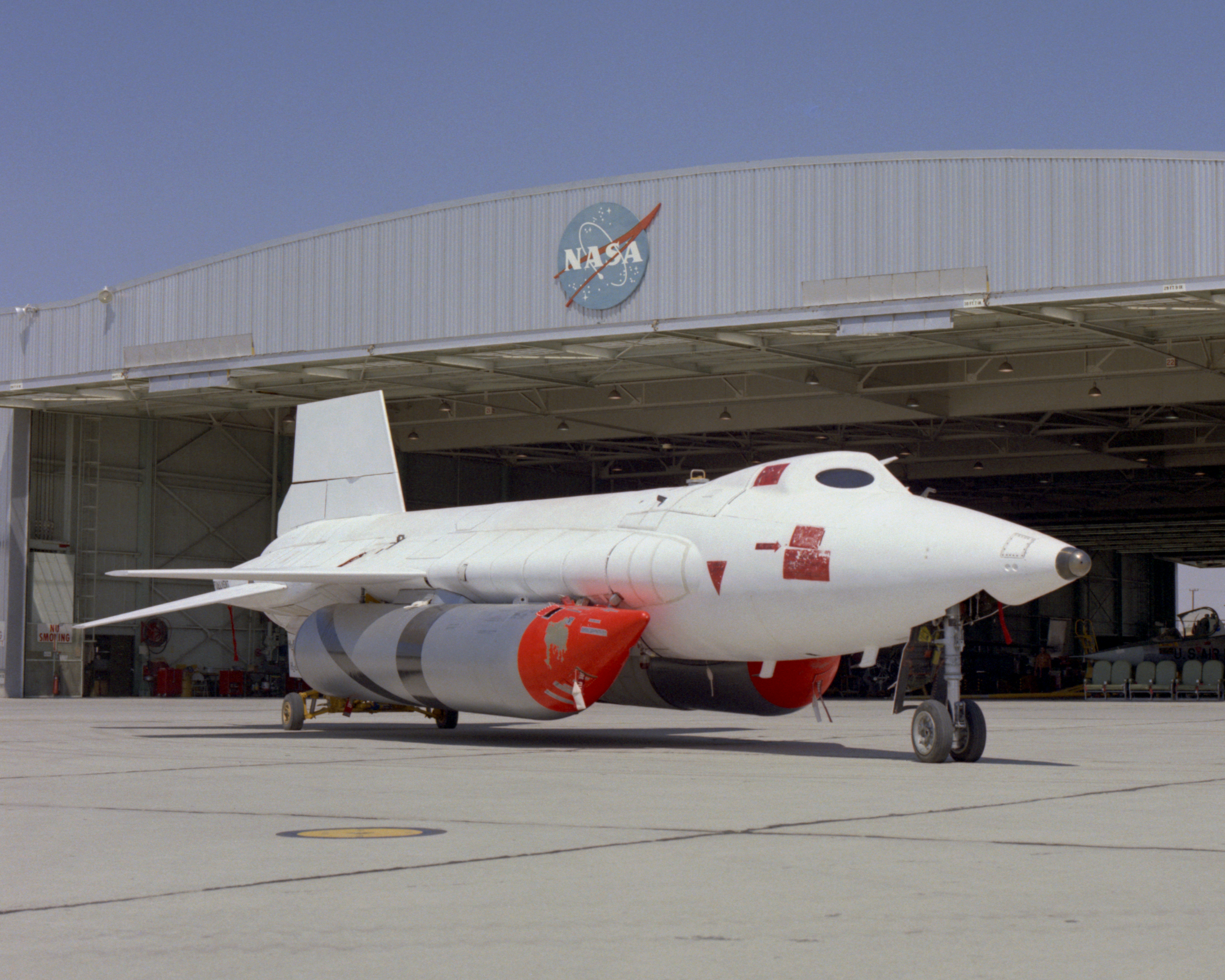
On October 3, 1967, Air Force pilot William J. “Pete” Knight flew the X-15A-2 to Mach 6.7—4,520 mph. The number still has the force of a headline, but the aircraft in the hero image explains what it demanded: this was not an ordinary black X-15. It was X-15 #2, rebuilt as the advanced A-2 and dressed in a pale protective skin for an encounter with heat at the edge of aircraft performance. Source 4Source 1
A white aircraft for a hotter flight
NASA’s preflight view shows X-15A-2 parked before its hangar with external tanks installed and a white sealant coat over its full-scale ablative coating. Beneath that white layer was a pink, eraser-like material intended to protect the rocket-powered research aircraft from the temperatures associated with hypersonic flight—above Mach 5. The external tanks and the protective treatment marked this as the modified #2 aircraft, rebuilt after a landing accident with more propellant capacity and a higher potential performance. Source 1Source 3
The makeover was preparation, not decoration. NASA’s catalog says the coating would help the aircraft reach the record speed: 4,520 mph, Mach 6.7. On October 3, Knight took it there. Source 1Source 4
Mach 6.7
Knight’s flight made the X-15A-2 the fastest X-15 flown. The supplied overview identifies 4,520 mph, achieved on October 3, 1967 at Mach 6.7, as the official world record for the highest speed recorded by a crewed, powered aircraft—and says it remains unbroken. Source 4
The physical price of that performance is visible in NASA’s post-flight photograph. Its catalog identifies the image as showing heat damage from the Mach 6.7 flight on October 3, with Pete Knight as pilot. The record was therefore not just a number from an instrument; it left an observable trace on the machine built to survive it. Source 2
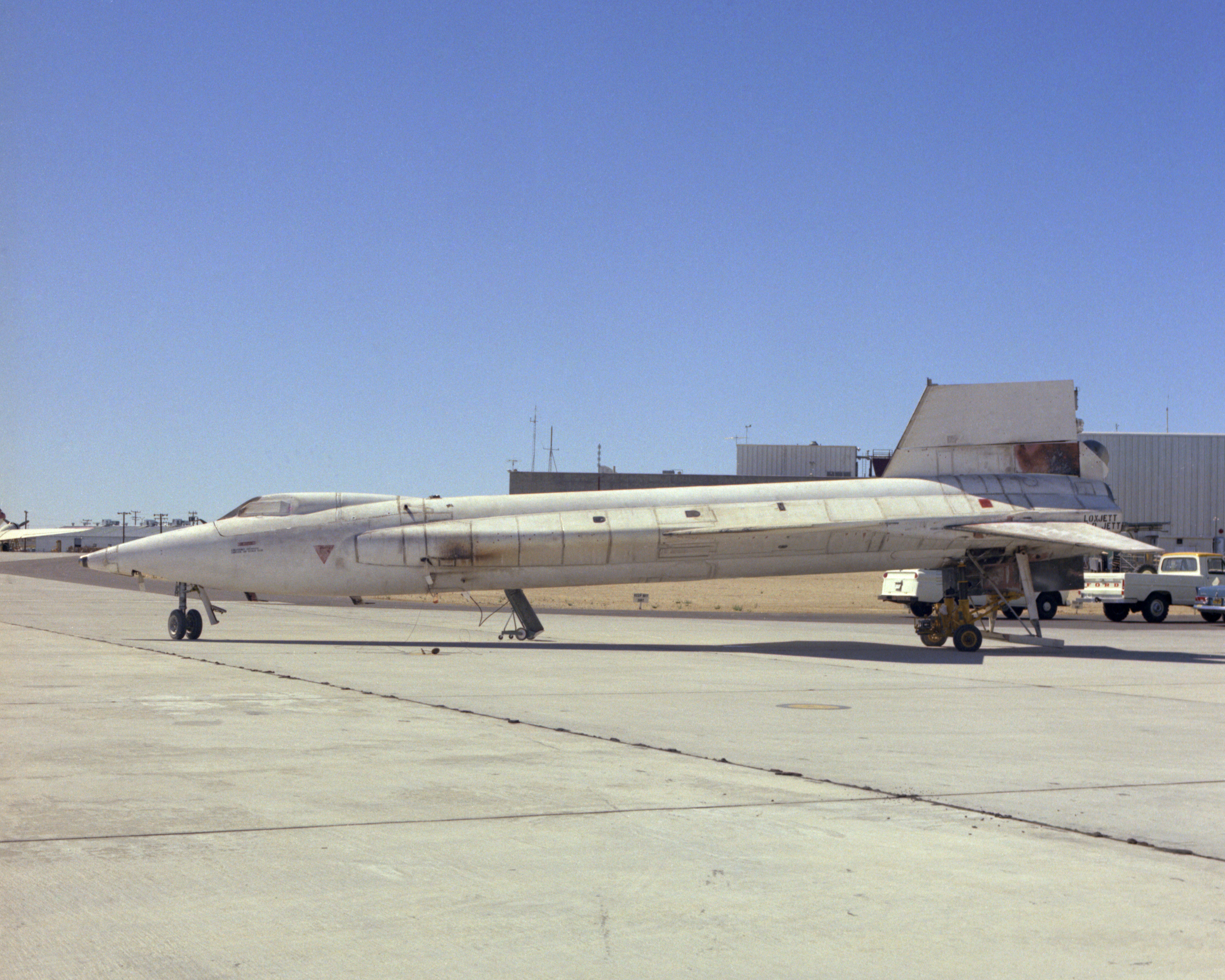
That damage also makes the white coating legible in retrospect. It was part of a practical answer to the same problem the photograph records: how to carry a piloted aircraft through extreme aerodynamic heating and bring it back. Source 1Source 2
Between aircraft and spacecraft
The X-15 was designed for a boundary that was both physical and conceptual. The Smithsonian describes it as bridging manned flight within the atmosphere and manned flight beyond the atmosphere into space. Air-launched from a modified Boeing B-52, it used conventional aerodynamic control surfaces in the atmosphere and reaction-control rockets in its nose and wings when flying on the fringes of space. Source 3
That mixture helps explain why the program mattered. The rocket-powered X-15 had already become the first winged aircraft to attain Mach 4, Mach 5, and Mach 6; its Inconel X structure was chosen to withstand aerodynamic temperatures on the order of 1,200 degrees Fahrenheit. X-15A-2 pushed that research identity into an unusually vivid form: a winged aircraft, a rocket plane, an air-launched experiment, and a vehicle whose controls changed with the air around it. Source 3
For broader archival program context, the selected NASA film is presented as a film about the X-15 research program—not as a record of Knight’s October 3 flight. Source 5
Optional archival program context for the X-15 research program; it is explicitly not presented as a recording of Knight’s October 3 flight.
Text fallback: This optional video is broader archival NASA-film context about the X-15 research program, not a record of Pete Knight’s October 3, 1967 flight. Source: airailimages on YouTube.
Watch on YouTubeWhat the record left behind
The preparation, the record, and the inspection form one short, revealing sequence. First came the white-sealed coating and external tanks; then Knight’s Mach 6.7 flight; then NASA’s image of the heat damage. The timeline makes that sequence explicit without pretending to be an archival object. Source 1Source 2Source 4
Modern explanatory timeline — not archival
- Protect
White-sealed ablative coating and external tanks prepare X-15A-2 for hypersonic heat and higher performance
- Accelerate
Pete Knight reaches Mach 6.7—4,520 mph—in X-15A-2
- Inspect
NASA documents visible heat damage from the record flight
View source-bound data
| Date Or Period | Stage | Reader Facing Value | Qualification |
|---|---|---|---|
| Before the flight | Protect | White-sealed ablative coating and external tanks prepare X-15A-2 for hypersonic heat and higher performance | NASA identifies the full-scale coating, white sealant, and external tanks in the supplied record. |
| October 3, 1967 | Accelerate | Pete Knight reaches Mach 6.7—4,520 mph—in X-15A-2 | The supplied overview gives the date, pilot, Mach number, and speed. |
| After landing | Inspect | NASA documents visible heat damage from the record flight | NASA identifies the post-flight image as showing heat damage from the Mach 6.7 October 3 flight. |
October 3 endures because the X-15A-2 did not merely go fast. It showed what a piloted research aircraft could do when its structure, propulsion, controls, and thermal protection were all asked to meet at the same limit. The record and the scarred post-flight image belong together: one tells how far Knight flew; the other shows what that distance through the air asked of the aircraft. Source 4Source 2